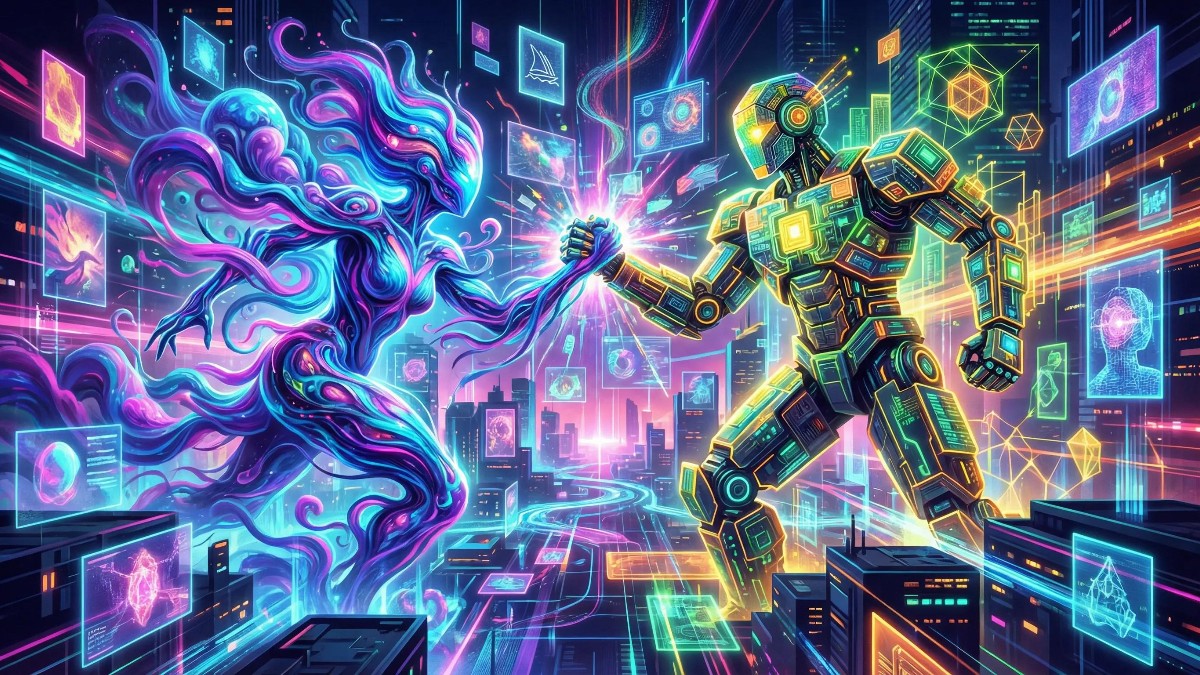
The rapid evolution of artificial intelligence has completely reshaped the creative industry. What once required professional designers, expensive software, and hours of manual work can now be accomplished in seconds with AI-powered image generators. These tools are no longer experimental toys — they are core assets for businesses, marketers, creators, developers, and designers.
Among dozens of AI image generation platforms available today, two names consistently dominate search engines, social media, and professional workflows: Midjourney and DALL·E. They are often mentioned in the same breath, yet they differ dramatically in philosophy, output style, usability, and ideal use cases.
If you are researching the best AI image generator in 2026, chances are you are deciding between Midjourney and DALL·E. This is not a simple choice. Each platform excels in specific scenarios and fails in others.
This in-depth guide will break down Midjourney vs DALL·E across every critical dimension: image quality, artistic style, realism, prompt accuracy, usability, pricing, commercial rights, workflows, limitations, and future potential.
This comparison is published by Sueio.com, where we deliver long-form, unbiased reviews of AI tools, SaaS platforms, and emerging technologies shaping the digital future.
The Rise of AI Image Generation
AI image generation has moved from niche research projects to mainstream adoption at an unprecedented pace. In just a few years, generative models have reached a level of quality that rivals human-made visuals in many commercial contexts.
Companies now use AI-generated images for:
- Website hero sections and blog illustrations
- Advertising creatives and social media visuals
- Product mockups and concept designs
- Branding experiments and mood boards
- Presentations, thumbnails, and digital assets
This explosive adoption has created a new challenge: choosing the right AI image generator. While many tools exist, Midjourney and DALL·E consistently emerge as the top contenders — but for very different reasons.
What Is Midjourney?
Midjourney is an AI image generation platform widely regarded as the gold standard for artistic and cinematic visuals. Since its launch, it has become the preferred tool for digital artists, illustrators, concept designers, and creative professionals seeking visually striking outputs.
Unlike traditional design software or web-based AI tools, Midjourney operates primarily through Discord. Users generate images by typing prompts into chat commands, receiving multiple variations within seconds.
This unconventional interface initially confused many users, but over time it became part of Midjourney’s identity. The platform evolved into a massive creative community where users share prompts, techniques, and inspiration.
Midjourney’s Creative Philosophy
Midjourney prioritizes artistic interpretation over literal accuracy. When you enter a prompt, the system does not simply try to replicate your instructions — it interprets them creatively, often producing unexpected and visually rich results.
This approach makes Midjourney especially powerful for:
- Concept art and fantasy imagery
- Cinematic scenes and dramatic lighting
- Illustrations and stylized portraits
- Abstract and experimental visuals
However, this same strength can become a weakness when precise control or realism is required.
Key Features of Midjourney
- High-resolution AI-generated images
- Advanced artistic stylization
- Image variations and upscaling
- Community-driven inspiration
- Fast generation speeds
- Commercial usage rights on paid plans
Midjourney is best understood as an AI artist rather than an AI designer.
What Is DALL·E?
DALL·E is an AI image generation system developed by OpenAI. It is designed to transform natural language prompts into images with a strong focus on clarity, realism, and instruction accuracy.
Unlike Midjourney, DALL·E is accessible through a clean web interface and API, making it significantly more approachable for beginners, businesses, and developers.
DALL·E has become especially popular among marketers, eCommerce brands, bloggers, and SaaS companies who need consistent, predictable visuals rather than purely artistic experimentation.
DALL·E’s Design Philosophy
DALL·E focuses on understanding and executing user intent as accurately as possible. If you specify an object, background, style, or composition, DALL·E aims to follow those instructions precisely.
This makes it particularly effective for:
- Marketing graphics and ad creatives
- Product visualizations and mockups
- Website and blog imagery
- Instruction-based image creation
DALL·E trades some artistic flair for consistency and reliability — a tradeoff many businesses gladly accept.
Key Features of DALL·E
- Text-to-image generation
- Inpainting and outpainting tools
- High prompt accuracy
- Beginner-friendly interface
- API access for automation
- Clear commercial usage rights
Midjourney vs DALL·E: Image Quality and Style
The most obvious difference between Midjourney and DALL·E is visual style.
Midjourney Image Style
Midjourney images often feel dramatic, cinematic, and emotionally charged. Lighting, depth, texture, and composition are consistently strong. Many outputs resemble concept art or illustrations created for films and video games.
Midjourney excels at:
- Atmospheric lighting
- Stylized characters
- Fantasy and sci-fi aesthetics
- Painterly and illustrative looks
However, Midjourney can struggle with strict realism, accurate text rendering, and precise object placement.
DALL·E Image Style
DALL·E images tend to be cleaner, more neutral, and more literal. They are often better suited for professional and commercial contexts where clarity matters more than artistic interpretation.
DALL·E performs well with:
- Photorealistic scenes
- Product visuals
- Simple compositions
- Brand-friendly imagery
Verdict: Midjourney wins for artistic quality; DALL·E wins for realism and consistency.
Prompt Accuracy and Creative Control
Prompt accuracy is one of the most critical factors when choosing an AI image generator.
DALL·E is widely considered superior in this area. It closely follows instructions related to:
- Number of objects
- Specific visual details
- Composition and layout
- Style constraints
Midjourney, by contrast, interprets prompts more loosely. While this can lead to stunning results, it can also produce images that deviate significantly from the original request.
For creative exploration, this flexibility is a strength. For business-critical visuals, it can be a limitation.
Ease of Use and Learning Curve
DALL·E is significantly easier for beginners. Its web interface requires no technical knowledge, and image generation feels intuitive.
Midjourney’s Discord-based workflow introduces friction for new users. Commands, parameters, and prompt syntax require time to master.
However, once learned, Midjourney becomes incredibly fast and flexible.
Ease-of-use winner: DALL·E
End of Part 1.
Pricing Models and Cost Efficiency
Pricing is one of the most important decision factors when choosing an AI image generator, especially for businesses and professionals who generate images at scale.
Midjourney Pricing
Midjourney operates exclusively on a subscription-based model. Users must choose a monthly or yearly plan, with pricing tiers based on generation speed, usage limits, and access to advanced features.
Typical Midjourney plans include:
- Basic plans for casual creators and experimentation
- Standard plans for regular image generation
- Pro plans for heavy users and commercial workflows
Midjourney does not currently offer a permanent free tier. This positions it as a premium creative tool rather than a casual experiment.
For artists and designers who generate a large volume of images, the subscription model can be cost-effective. However, for occasional users, it may feel restrictive.
DALL·E Pricing
DALL·E typically operates on a credit-based or usage-based pricing model. Users pay for image generations based on volume, which provides flexibility.
This model is especially appealing for:
- Businesses with fluctuating usage needs
- Developers integrating image generation via API
- Marketers who need images occasionally rather than daily
DALL·E’s pricing structure allows better cost control for low to medium usage, while heavy users may find subscriptions more economical in the long run.
Pricing verdict: DALL·E offers more flexibility, while Midjourney rewards consistent heavy use.
Commercial Usage Rights and Licensing
Commercial rights are a critical consideration for businesses, agencies, and creators monetizing AI-generated images.
Midjourney Licensing
Midjourney allows commercial use of generated images on paid plans. However, licensing terms vary depending on the subscription tier.
For most professional users, Midjourney’s licensing is sufficient for:
- Client work
- Digital products
- Marketing campaigns
That said, users should carefully review Midjourney’s terms, especially when working with high-profile brands or resale scenarios.
DALL·E Licensing
DALL·E provides clearer and more straightforward commercial usage rights. Images generated through DALL·E can typically be used commercially without attribution.
This clarity makes DALL·E particularly attractive for:
- eCommerce brands
- SaaS companies
- Advertising agencies
- Content publishers
Licensing winner: DALL·E
Use Cases by Industry
Marketing and Advertising
For marketing teams, speed, clarity, and consistency matter more than artistic experimentation.
DALL·E performs exceptionally well in marketing scenarios where images must align closely with brand guidelines and messaging.
Midjourney, while visually stunning, may require more iteration to achieve brand-safe results.
Design and Creative Work
Designers and artists often prefer Midjourney due to its expressive and cinematic outputs.
It excels in mood boards, conceptual art, illustrations, and creative exploration.
eCommerce and Product Visualization
DALL·E is generally the stronger option for eCommerce. Its realism and editing tools make it suitable for product mockups, lifestyle shots, and promotional imagery.
Midjourney can be used creatively in branding campaigns but is less precise for product-focused visuals.
Workflow Integration and Automation
DALL·E’s API access makes it easy to integrate image generation into automated workflows. Developers can generate images dynamically for apps, websites, and content pipelines.
Midjourney, being Discord-based, is less suitable for automation and large-scale integration.
Automation winner: DALL·E
Ethics, Safety, and Content Moderation
AI-generated imagery raises important ethical questions around misuse, copyright, and misinformation.
DALL·E applies stricter content moderation policies and guardrails, reducing the risk of generating harmful or misleading content.
Midjourney allows more creative freedom, which can be empowering but also requires responsible usage.
Safety-focused environments: DALL·E
Pros and Cons Summary
Midjourney Pros
- Unmatched artistic and cinematic quality
- Highly creative interpretations
- Strong community and inspiration ecosystem
- Excellent for conceptual and illustrative work
Midjourney Cons
- Discord-only interface
- Less precise prompt control
- Limited automation capabilities
DALL·E Pros
- High prompt accuracy and realism
- User-friendly interface
- Advanced image editing tools
- Clear commercial licensing
DALL·E Cons
- Less artistic flair
- Costs can increase with heavy usage
Final Verdict: Midjourney vs DALL·E
Midjourney and DALL·E represent two fundamentally different visions of AI image generation.
Midjourney is best viewed as an AI artist — expressive, imaginative, and visually stunning. It is ideal for creators who value aesthetics, mood, and artistic exploration.
DALL·E, on the other hand, is an AI designer — precise, reliable, and business-friendly. It excels in commercial environments where clarity, control, and scalability matter.
There is no universal winner. The best AI image generator depends entirely on your goals.
If your priority is breathtaking visuals and creative freedom, choose Midjourney. If you need reliable, editable, and brand-safe images, choose DALL·E.
For more in-depth AI comparisons, SaaS reviews, and technology insights, visit Sueio.com.
Official Links


 AI-Powered Payment Platforms and the Accelerated Disappearance of Physical Cash27 de February de 2026