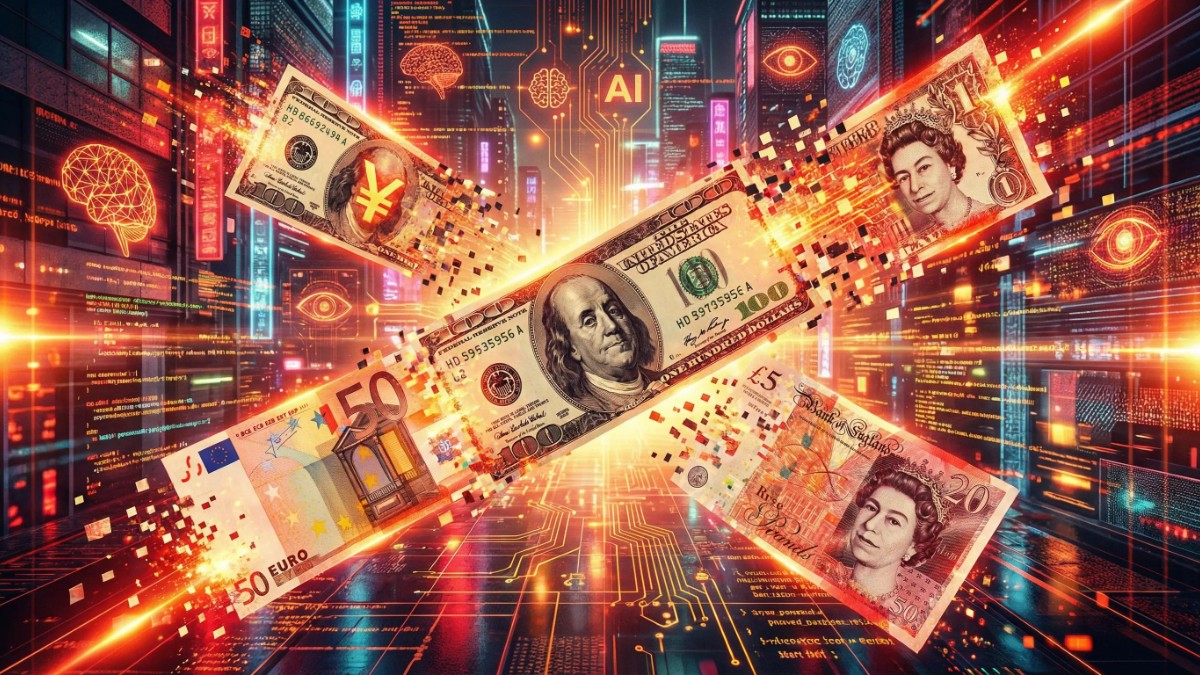
For centuries, physical cash has been the backbone of global economies. Banknotes and coins enabled trade, preserved value, and symbolized financial sovereignty.
However, the rise of artificial intelligence is accelerating a transformation that was already underway: the gradual disappearance of physical money.
From AI-powered payment systems to fraud detection, digital wallets, and automated financial decision-making, intelligent technologies are reshaping how value moves through society.
This article explores how artificial intelligence is directly and indirectly contributing to the decline of cash circulation worldwide, examining economic, technological, social, and political implications.
The Historical Role of Physical Cash
Physical money has existed in various forms for thousands of years. From metal coins to paper banknotes, cash enabled economies to scale beyond barter systems.
Cash provided anonymity, immediacy, and universal acceptance. Even with the rise of banking systems, cash remained essential for daily transactions.
In many regions, physical currency is deeply embedded in culture and trust.
The First Wave of Digital Payments
The decline of cash did not begin with artificial intelligence.
Credit cards, debit cards, and online banking marked the first wave of cash reduction. These systems digitized value transfer but still relied heavily on human oversight.
Despite this, cash continued to circulate due to accessibility, privacy, and infrastructure limitations.
The Emergence of AI in Financial Systems
Artificial intelligence introduced a fundamental shift.
Unlike traditional digital systems, AI enables real-time decision-making, predictive analytics, behavioral modeling, and automated trust mechanisms.
This intelligence layer allows financial systems to operate faster, safer, and with minimal human intervention.
AI-Powered Fraud Detection and the Decline of Cash
One of the strongest arguments historically in favor of cash was privacy.
However, AI-powered fraud detection systems have significantly reduced the risks associated with digital transactions.
Machine learning models analyze transaction patterns, detect anomalies, and prevent fraud instantly.
This has increased trust in cashless systems and reduced reliance on physical money.
Smartphones, AI, and Universal Access to Digital Money
AI embedded in smartphones has democratized access to digital payments.
Voice assistants, biometric authentication, and intelligent interfaces have made cashless payments intuitive even for non-technical users.
Facial recognition and fingerprint authentication, powered by AI, replace the need for physical wallets.
AI and Central Bank Digital Currencies (CBDCs)
Central banks worldwide are exploring or deploying digital currencies.
AI plays a critical role in managing, monitoring, and securing CBDCs.
Unlike physical cash, CBDCs allow programmable money, automated compliance, and real-time economic monitoring.
Programmable Money and Behavioral Economics
AI enables programmable money that can enforce spending rules, expiration dates, and targeted incentives.
This capability is impossible with physical banknotes.
Governments and institutions see programmable digital currency as more efficient than cash.
Retail Automation and Cashless Stores
AI-driven retail automation accelerates the disappearance of cash.
Cashless stores use computer vision, sensors, and AI to track purchases and charge customers automatically.
These environments eliminate cash handling costs and inefficiencies.
Cost of Printing and Managing Cash
Physical cash is expensive.
Governments spend billions annually on printing, transporting, securing, and replacing banknotes.
AI-driven digital systems drastically reduce these costs.
AI, Data, and Financial Transparency
AI thrives on data.
Digital payments generate valuable economic insights, while cash transactions remain opaque.
From a policy perspective, AI-enabled transparency is preferred.
Impact on the Informal Economy
Cash is deeply connected to informal and shadow economies.
AI-powered financial systems reduce anonymity and bring transactions into formal structures.
This shift is both praised and criticized.
Developing Countries and Leapfrogging Cash
In many developing regions, AI-powered mobile payments bypassed traditional banking.
Populations moved directly from cash to digital wallets.
AI credit scoring replaces traditional financial history.
AI Credit Scoring and Microfinance
AI enables alternative credit scoring models.
These systems assess behavior, mobile usage, and transaction history.
Cash-based economies struggle to integrate with such models.
Social Implications of Cash Reduction
The decline of cash raises concerns about surveillance, exclusion, and control.
AI amplifies both benefits and risks.
Ethical frameworks are increasingly necessary.
Privacy vs Convenience Debate
Cash offers anonymity.
AI-powered digital systems offer convenience.
Societies are navigating this trade-off.
AI Regulation and Monetary Control
AI gives governments unprecedented monetary oversight.
This changes the balance of financial power.
Resistance to Cashless Systems
Despite advantages, resistance exists.
Cultural, ethical, and political factors slow full cash elimination.
The Role of Big Tech
Technology companies leverage AI to dominate payment ecosystems.
This reshapes global finance.
AI and Financial Inclusion
AI can include or exclude.
Design choices determine outcomes.
Future Outlook
The decline of physical cash will continue.
AI is the primary accelerator.
Conclusion
Artificial intelligence is not merely replacing cash—it is redefining money itself.
The disappearance of banknotes represents a profound societal shift.
For deeper analysis on AI, finance, and technology trends, visit Sueio.
AI-Driven Payment Ecosystems and the Disappearance of Cash
Artificial intelligence is not acting alone. It operates within complex digital payment ecosystems that reinforce the decline of physical money.
Payment platforms powered by AI analyze user behavior, predict spending habits, and optimize transaction flows in real time.
These systems make cash increasingly unnecessary by offering faster, safer, and more personalized alternatives.
Digital Wallets and Intelligent Financial Assistants
AI-driven digital wallets are evolving beyond simple storage of funds.
They now act as intelligent financial assistants, suggesting optimal payment methods, managing subscriptions, and automating savings.
This level of intelligence cannot coexist with physical cash.
Behavioral Nudging and Cashless Adoption
AI subtly influences user behavior.
Through personalized recommendations, rewards, and frictionless experiences, users are nudged toward cashless payments.
Over time, these nudges normalize digital transactions.
AI and the Psychology of Money
Money is psychological.
AI systems understand spending behavior better than humans.
By abstracting money into digital representations, AI reduces emotional attachment to physical cash.
Retailers’ Incentives to Eliminate Cash
Retailers benefit significantly from going cashless.
AI-powered analytics optimize inventory, pricing, and staffing.
Cash introduces friction and blind spots.
Supply Chain Automation and Digital Transactions
Modern supply chains rely on AI forecasting and automation.
Cash is incompatible with machine-driven commerce.
Digital payments integrate seamlessly.
AI and Tax Compliance
Governments increasingly rely on AI for tax enforcement.
Cash-based transactions evade automated systems.
Digital money aligns with AI-based fiscal oversight.
Cash as a Barrier to Smart Cities
Smart cities depend on AI-driven infrastructure.
Transportation, utilities, and public services integrate digital payments.
Cash becomes an obstacle.
AI Surveillance Concerns
The disappearance of cash raises surveillance concerns.
AI can track spending patterns at scale.
Societies debate acceptable limits.
Ethical Frameworks for Cashless Societies
Ethical AI frameworks aim to protect individual rights.
Without safeguards, cashless systems risk exclusion.
AI Bias and Financial Exclusion
AI systems reflect training data.
If poorly designed, they may exclude vulnerable populations.
Cash historically served as a safety net.
Offline Transactions and Resilience
Cash functions without electricity or internet.
AI systems require infrastructure.
This raises resilience concerns.
Geopolitical Implications
Control over digital money is strategic.
AI-enhanced financial systems reshape global power.
Cross-Border Payments and AI
AI streamlines cross-border payments.
Cash struggles in globalized economies.
Cryptocurrencies, AI, and Cash Decline
Cryptocurrencies accelerate cash reduction.
AI manages trading, security, and compliance.
Stablecoins and Programmable Finance
Stablecoins mimic fiat currencies digitally.
AI ensures stability and liquidity.
AI and Consumer Trust
Trust is central to money.
AI-powered transparency increases confidence in digital systems.
Education and Financial Literacy
AI-driven education platforms teach cashless finance.
New generations grow up without cash reliance.
Generational Shift Away from Cash
Younger users rarely use cash.
AI-native experiences shape habits.
Emergency Scenarios and Cash Dependency
Emergencies highlight cash resilience.
Hybrid systems may persist.
Will Cash Ever Fully Disappear?
Complete elimination is unlikely in the short term.
But circulation will continue to shrink.
Hybrid Financial Models
AI-driven systems coexist with limited cash usage.
This transition phase may last decades.
Long-Term Economic Consequences
The decline of cash reshapes monetary policy.
AI becomes a core economic actor.
Conclusion
Artificial intelligence accelerates the decline of physical cash by making digital money more efficient, intelligent, and controllable.
The reduction of banknotes is not just technological—it is cultural, political, and psychological.
Understanding this shift is essential for navigating the future of money.
For in-depth analysis on AI, finance, and global technology trends, visit Sueio.

 AI-Powered Payment Platforms and the Accelerated Disappearance of Physical Cash27 de February de 2026


