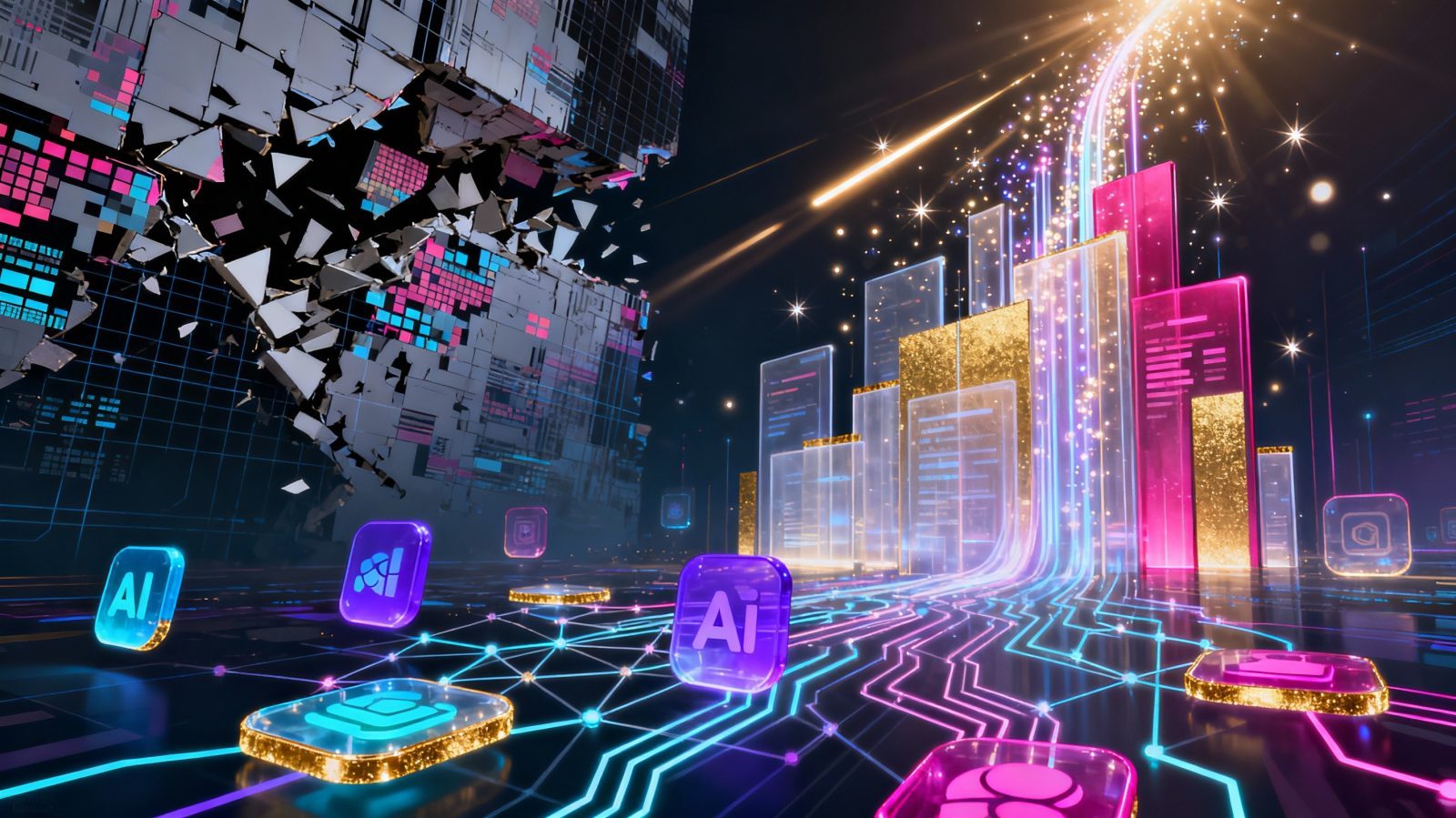



The End of Big Tech App Stores — Sueio Reveals How AI App Markets Are Taking Over in 2026
For 15 years, the digital world has revolved around a monopoly: the Apple App Store and Google Play Store. These two giants controlled mobile software distribution, dictated fees, restricted competition, and shaped the digital economy. Developers had no alternative. Users had no alternative. Big Tech built a fortress around apps — and the world accepted it. Until now.
In 2026, a seismic shift is taking place. For the first time in history, App Stores are no longer the center of software distribution. They are being replaced by something bigger, faster, more flexible and radically more powerful:
AI App Markets.
Platforms like the GPT Store, Gemini App Store, xAI’s Grok Marketplace, Claude Skills Store, and dozens of AI-native markets are rising faster than any previous software revolution.
These are not “apps.” They are intelligent agents capable of performing tasks, integrating services, automating workflows, producing content, analyzing data, writing code, and replacing traditional SaaS platforms. And consumers are flocking to them in numbers Big Tech never predicted.
Today, Sueio reveals the complete story — the rise of AI app markets and how they are replacing the Apple App Store, Google Play, Chrome Web Store and even traditional SaaS platforms.
For more AI industry insights, visit Sueio.com.
1. What Exactly Is an AI App Market?
Unlike traditional app stores, where apps are static packages you download, AI app markets distribute:
- AI agents
- AI workflows
- automation scripts
- model-specific plugins
- AI-driven SaaS replacements
- multi-step intelligent tasks
- AI personalities
- domain-specific copilots
These apps do not “run on your phone.” They run on powerful cloud-based AI models like GPT-5, Claude 3, Gemini Ultra, xAI Grok, and Mistral Large.
You are not installing software — you are installing intelligence.
2. Why Big Tech App Stores Are Crumbling
The Apple App Store and Google Play became victims of their own system:
- 30% “Apple Tax” and “Google Tax” destroyed developer profit margins
- slow approval processes frustrated creators
- privacy restrictions made innovation harder
- no true customization or automation
- apps became bloated, expensive and inefficient
Meanwhile, AI-native apps:
- run instantly in the browser
- require no installation
- update in real time
- use cloud compute instead of device resources
- cost almost nothing to build
- operate on neural reasoning instead of static code
Traditional apps are dinosaurs. AI apps evolve with every model update.
3. The GPT Store — The App Store Killer
When OpenAI launched the GPT Store, the world changed overnight. Millions of AI-powered apps were created in weeks:
- financial advisors
- coding agents
- fitness guides
- legal assistants
- SEO optimizers
- math tutors
- social media managers
- video creators
Users no longer needed:
- dozens of subscriptions
- multiple SaaS tools
- expensive consultants
They now had “AI specialists” — and many performed better than human experts.
The GPT Store became the closest thing to an “AI App Store,” and it shook the entire SaaS industry.
4. Google’s Gemini Store — The Multimodal Supermarket
Google entered the battlefield with brute force. The Gemini App Store offers:
- AI agents directly embedded into Google Search
- real-time data through YouTube, Maps and Gmail
- hyper-optimized reasoning using Gemini Ultra
- Apps powered by Google Workspace
This is not a competitor to the GPT Store. It is a competitor to the entire app ecosystem of the last 15 years.
Gemini apps can read your email, analyze spreadsheets, generate documents, create presentations, and automate your entire professional workflow — instantly.
5. xAI’s Grok Marketplace — The Real-Time App Engine
Elon Musk’s xAI introduced the world’s first real-time AI marketplace, powered by Grok. Grok apps read and act on live social data from X/Twitter, something no other AI system had until then.
Marketplace apps include:
- real-time stock sentiment AI
- viral-trend detectors
- AI journalist assistants
- breaking-news engines
- social listening bots
It’s the first AI market where apps update in real time — like living organisms.
6. Anthropic’s Claude Store — Intelligence With Boundaries
Anthropic’s Claude Skills Store brings a “safety-first” approach to AI apps.
Claude 3 Opus and Sonnet power apps designed for:
- legal standards compliance
- enterprise governance
- medical research
- ethical automation
- corporate data privacy
This store is not focused on entertainment or viral apps. It aims to become the backbone of enterprise AI — the new SAP, Oracle or IBM.
7. Why AI Markets Are Replacing Traditional App Stores
AI markets do not sell apps. They sell capabilities.
Traditional apps do:
- one task
- in one UI
- with manual user input
AI apps do:
- many tasks
- across multiple platforms
- with autonomy and reasoning
- using natural language
- 24/7 automation
Example: A traditional fitness app tracks calories. An AI app becomes your personal trainer, nutritionist, chef, motivator and doctor — instantly.
This is not evolution. This is replacement.
8. How AI App Markets Threaten Big Tech’s Revenue Model
Apple earns over $20 billion per year from App Store fees. Google earns over $30 billion from Play Store and Google Ads integrated in apps.
AI markets threaten this in 7 ways:
- No installation → no App Store required
- No device dependency → apps run in the cloud
- No 30% fee → developers keep almost everything
- No approval process → instant publishing
- No device fragmentation → AI models work everywhere
- No subscriptions → cheap per-task pricing
- No code updates → model improvements do it automatically
Developers no longer say “Let’s build an app.” They now say “Let’s build an agent.”
9. The Rise of Multi-Agent Systems
AI apps are not isolated tools. They are built on multi-agent architecture — networks of intelligent components cooperating with each other.
Multi-agent ecosystems can:
- search the internet
- write code
- use APIs
- schedule meetings
- manage finances
- analyze risks
- build marketing funnels
- create videos, images and documents
These systems behave like teams of virtual employees. An app with 20 internal agents can replace an entire company department.
10. Which AI Store Will Win?
The battle resembles early smartphone history:
- OpenAI = Apple (polished, controlled ecosystem)
- Google = Android (massive distribution)
- xAI = Twitter-era wildcard (real-time intelligence)
- Anthropic = enterprise-grade IBM
- Mistral & Hugging Face = Linux of AI (open-source backbone)
There is no single winner. But there is a clear loser: traditional app stores.
11. What This Means for Developers
Developers no longer need to:
- learn Swift or Java
- submit apps for approval
- manage updates
- pay hosting costs
Developing for AI markets is easier:
- natural language instructions
- zero infrastructure
- instant deployment
- global availability
In 2026, the highest-paid developers aren’t building apps — they’re building AI personalities.
12. What This Means for Users
Users no longer download apps. They summon intelligence.
Instead of searching for:
- budget apps → you get a personal financial analyst
- photo editors → you get a professional designer
- workout apps → you get a fitness coach
- shopping apps → you get a buying assistant
AI apps act on your behalf — often better than you could.
13. Sueio’s Final Warning: The Old Internet Is Ending
App Stores defined the last era of computing. AI stores will define the next.
The companies that fail to adapt will disappear — just like Nokia, BlackBerry, MySpace and Yahoo did.
The companies that embrace agents, multimodal AI and multi-store ecosystems will rule the next decade.
This is the beginning of the largest platform shift since the invention of the smartphone.
Explore more breaking AI news and global SaaS shifts at Sueio.com.

Artificial Intelligence and the Disappearance of Physical Cash: A New Financial Era
Artificial Intelligence and the Disappearance of Physical Cash: A New Financial Era For centuries, physical cash has been one of the most important tools of economic exchange. Coins and banknotes have served as the foundation of trade, commerce, and personal finance across civilizations. However, the rapid advancement of artificial intelligence is beginning to reshape how…


AI, Digital Banks, and the Progressive Disappearance of Physical Cash
AI, Digital Banks, and the Progressive Disappearance of Physical Cash The global financial system is undergoing one of the most profound transformations in modern history. Artificial intelligence is reshaping banking infrastructure, accelerating the expansion of digital banks, and gradually reducing dependence on physical currency. As AI-powered financial platforms scale worldwide, physical banknotes are steadily losing…

AI Automation in Retail and the Silent Disappearance of Physical Cash
The Retail Sector as a Catalyst for Cash Elimination The retail industry is one of the most visible environments where artificial intelligence is accelerating the decline of physical cash. From automated checkout systems to computer vision-based stores, AI is transforming how consumers interact with commerce. As retail infrastructure becomes increasingly digitized, the operational need for…


